Key takeaways
- Rule-based fault diagnosis is brittle; pure machine learning is accurate but hard to explain.
- Golden Data combines a domain knowledge graph with adaptive ML for diagnosis that is both accurate and explainable.
- A four-step method: semantic mapping → sensor integration → AI classification → feedback learning.
- The approach is covered by patent GB2619825A and runs in the DPlus platform.
As industry digitalises, fault diagnosis is where a lot of value hides. Traditional rule-based systems are rigid and break when reality doesn't match the rulebook. Pure machine-learning models are flexible and accurate — but their "black box" nature makes engineers hesitate to act on them. The answer isn't one or the other; it's both, working together.
From raw data to intelligent diagnosis
By integrating semantic knowledge networks with adaptive AI models, manufacturers can dramatically increase reliability, reduce maintenance costs, and uncover hidden operational insights. The knowledge graph supplies the why — how equipment, components, faults and causes relate — while machine learning supplies the what's happening now from live sensor data.
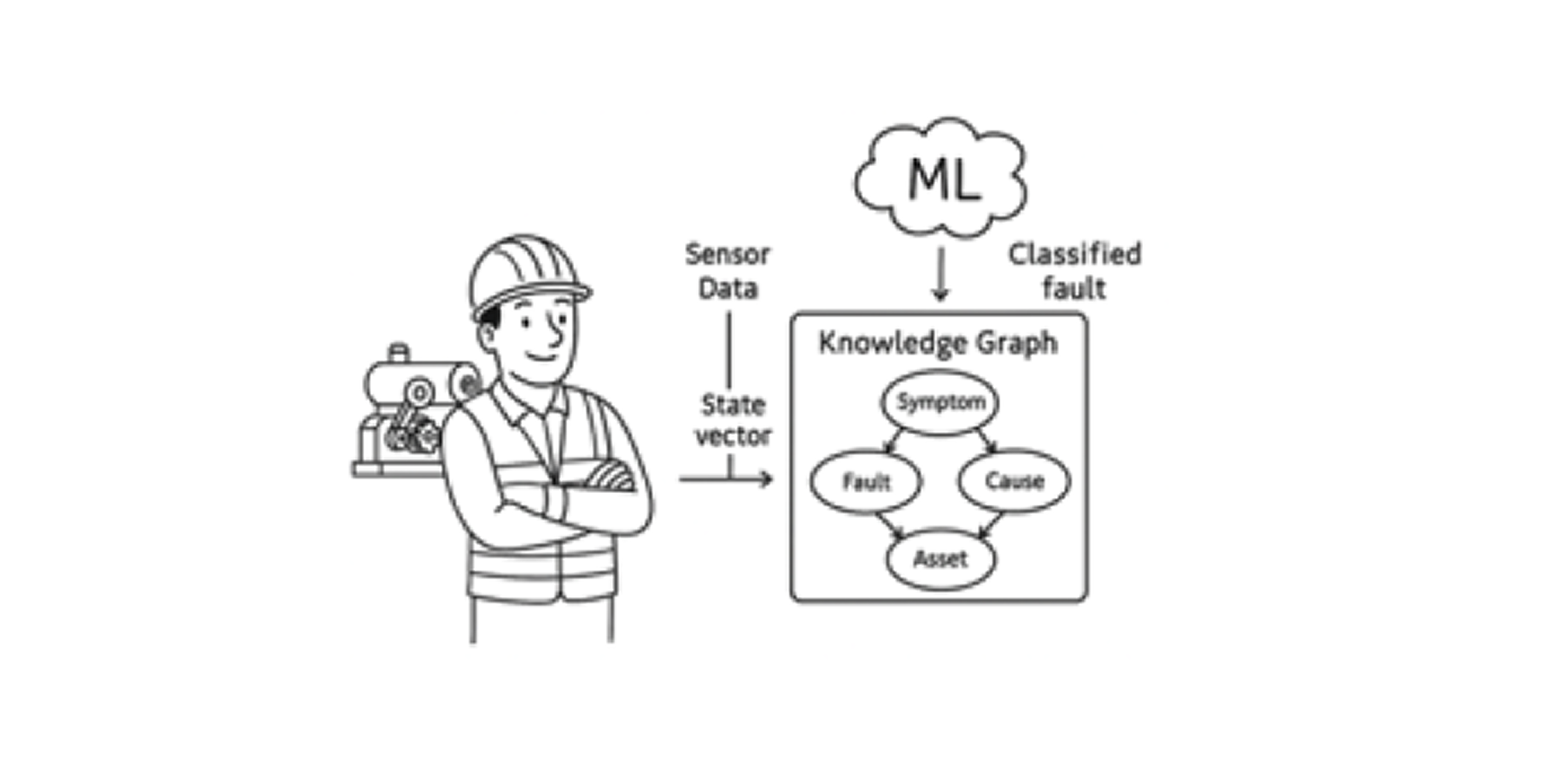
How the system works: four steps
1. Semantic mapping
A domain-specific knowledge graph captures equipment structure, failure modes and causal relationships — the engineering knowledge that usually lives in experts' heads.
2. Sensor integration
Real-time sensor data is connected to the graph, so each reading is interpreted in the context of the asset it belongs to.
3. AI classification
Machine-learning models classify fault types from the combined signal, predicting problems before they physically manifest.
4. Feedback learning
Outcomes feed back into the model, so diagnosis improves with every case — and the knowledge graph stays current.
Why it matters
Grounding AI in a knowledge graph delivers two things black-box models can't: explainability — engineers can see why a fault was flagged — and adaptability — the system keeps learning. This is exactly the role our OODT semantic-mapping agent, Otto, plays inside DPlus: it builds the object network that every other diagnostic capability reasons over.
The takeaway
The future of industrial fault diagnosis isn't a smarter rulebook or a bigger model — it's a semantic foundation that makes machine learning trustworthy enough to act on.