Key takeaways
- General-purpose LLMs lack plant-specific knowledge and can hallucinate — a serious risk on safety-critical industrial assets.
- A trusted enterprise knowledge base grounds the model in verified, company-specific facts so answers are traceable, not guessed.
- The combination closes the expertise gap: it captures the tacit know-how of retiring senior experts and makes it available to every frontline worker.
- Golden Data's DPlus delivers this through three pillars — automated knowledge construction, trusted intelligence, and cost optimisation.
Large language models have changed what people expect from enterprise software. Ask a question in plain English, get a fluent answer. But in heavy industry, fluency is not the same as correctness — and a confident wrong answer about a turbine, a furnace or a chemical process is worse than no answer at all. The challenge for industrial enterprises is not "can we use an LLM" but "how do we make an LLM trustworthy enough to act on." The answer is to stop treating the model as the source of truth and start pairing it with one.
Why LLMs alone fall short in industry
A general-purpose LLM is trained on public data. It has never seen your specific equipment, your maintenance history, your operating procedures or the hard-won lessons buried in your engineers' heads. When asked something outside its training, it does not say "I don't know" — it produces a plausible-sounding answer. This tendency to hallucinate is tolerable when drafting an email and dangerous when diagnosing a fault on a live asset. For industrial AI to be useful, its answers must be grounded in verified, company-specific facts and be traceable back to a source.
What is the "expertise gap"?
The expertise gap is the widening distance between the deep tacit knowledge held by a small number of senior experts and the knowledge available to the wider frontline workforce. As experienced staff retire, decades of know-how walk out of the door. Capturing that knowledge in a structured base — and surfacing it through natural language — lets every operator reach an expert-level answer.
The fix: ground the model in a knowledge base
A structured enterprise knowledge base supplies authoritative facts about assets, processes and procedures. Instead of relying on what it memorised during training, the LLM retrieves and reasons over those facts — a pattern often called retrieval-augmented generation. The effect is twofold: hallucination drops sharply because answers are anchored to verified information, and every answer can be traced back to a source the enterprise already trusts. The LLM becomes the natural-language interface; the knowledge base remains the source of truth.
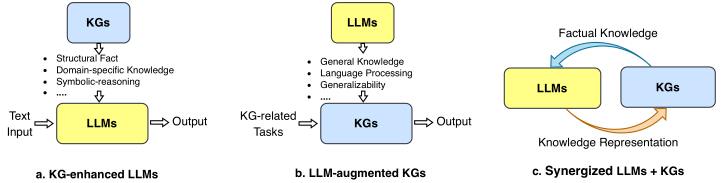
How DPlus brings the two together
Golden Data's DPlus platform is built on this principle, organised around three pillars:
- Automated knowledge construction. DPlus builds the enterprise knowledge base for you — extracting structure from manuals, sensor streams, work orders and historical records into a knowledge graph and the OODT object model. This is what turns scattered, tacit know-how into a queryable asset.
- Trusted intelligence. The LLM is connected to that knowledge base as a reasoning and explanation layer, so answers are grounded, traceable and aligned with the enterprise's own definitions — not a public model's best guess.
- Cost optimisation. Because the heavy lifting of facts and structure sits in the knowledge base, the system can use models efficiently, reducing the cost of running AI at scale.
This is the same trusted-knowledge backbone that our digital expert agents draw on when they diagnose faults, answer operator questions or recommend a next action.
*Indicative; actual savings depend on data readiness, scope and existing systems.
What this means for operators
The promise is not an AI that replaces your experts — it is an AI that scales them. When a junior technician can ask a question and get an answer grounded in the same knowledge a 30-year veteran would draw on, the whole workforce levels up. The expertise gap narrows, knowledge stops retiring with people, and the enterprise builds an asset that compounds: the more it is used, the more it captures.
The takeaway
LLMs are a powerful interface, not a source of truth. In industry, the winning architecture pairs the model's language ability with a trusted, structured knowledge base that grounds every answer in verified fact. That combination — automated to build, trusted to rely on, and economical to run — is how enterprises turn promising AI into dependable AI.