Key takeaways
- Reactive and fixed-schedule maintenance miss developing faults and cause costly unplanned downtime.
- A digital twin plus data-driven models enables a closed loop: Monitoring → Analysis → Prediction → Decision → Feedback.
- DPlus uses LSTM, CNN and Isolation Forest with FMEA to predict and prioritise failures.
- In a steel plant, DPlus monitored 63 machines and caught gearbox wear early enough to act.
Digital twins create virtual replicas of physical assets, enabling real-time monitoring, simulation and optimisation through IoT, big data and AI. For maintenance teams, that's a profound shift: instead of reacting to breakdowns or replacing parts on a fixed calendar, you can see a failure forming and act exactly when it matters.
The problem with traditional maintenance
Reactive maintenance waits for things to break. Scheduled maintenance replaces healthy parts and still misses faults that develop off-cycle. Both leave a gap: no early, asset-specific warning. On high-value lines, that gap is expensive — a single unplanned stoppage can cost far more than the monitoring that would have prevented it.
The DPlus advantage: a closed loop
The DPlus platform unifies data collection, processing, modelling and AI-driven decision-making into one integrated solution, running a continuous loop: Monitoring → Analysis → Prediction → Decision → Feedback. Under the hood it combines algorithms such as LSTM, CNN and Isolation Forest with FMEA (Failure Mode and Effects Analysis), so predictions are not only accurate but prioritised by the impact of each failure mode.
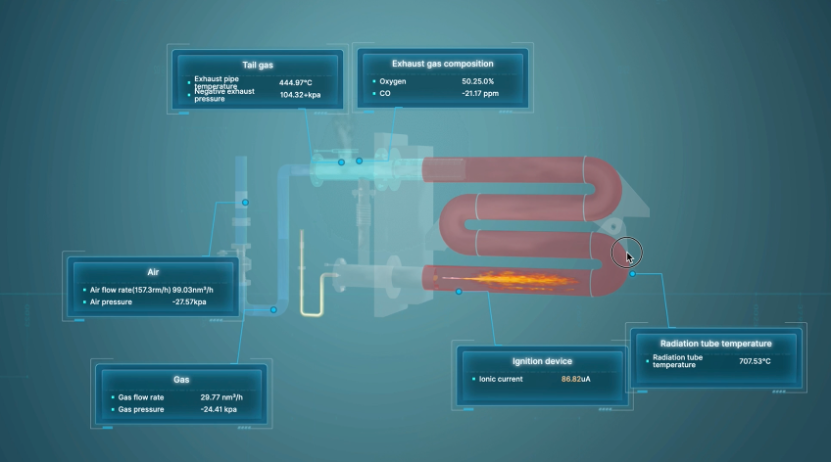
Case study: a steel plant, 63 machines
At a steel plant, DPlus monitored 63 machines across the line. The system detected gearbox wear early — surfacing a developing fault that a calendar-based programme would have missed — and enabled a timely intervention before it became an unplanned failure. This is the same reliability loop our expert agent, Riley, runs across rotating-equipment fleets.
The takeaway
DPlus shifts maintenance from reactive to predictive, from fragmented to integrated, and from human-reliant to intelligent. The win isn't just fewer breakdowns — it's a team that can plan around the asset instead of being surprised by it.